

Unlock your brain’s natural ability to heal.
Brainspotting is an innovative therapy approach that gets beneath the “software” and goes straight to the “hardware” of your brain.
Have you ever found yourself “staring off into space” while thinking about something?
That’s not accidental. Your brain is doing something important—and when harnessed, this natural state can be life-changing.

How Brainspotting Works
Brainspotting’s founder, David Grand, had been working with an ice skater using a therapy treatment called EMDR that involves back-and-forth eye motion. One problem still hadn’t been solved: her inability to do a triple lutz.
He noticed her eyes do a “spasm” in session and asked her to focus her eyes on that point, rather than continuing to move back and forth. To his amazement, a cascade of traumatic memories poured forth, like something had been unlocked inside her that was ready to be let out. The next day, she called to inform him that she’d successfully completed a triple lutz!
He began to implement this technique with his other clients, and little by little, Brainspotting developed. It has since been scientifically validated by a number of studies.
What’s unique about this approach is that it has been taught and developed by clients’ breakthroughs and the innate wisdom of their brains. Brainspotting rests in the belief that the brain wants to heal and knows exactly where it needs to go—if we will just follow where it’s leading. It goes past the neocortex (adult, logical brain) and accesses the subcortex, where trauma actually gets stored and where long-term change actually happens. It helps us get past that point in therapy when we feel stuck because we’ve learned what to do but can’t seem to do it in the moment. I personally believe it is a spiritual process, in line with our Creator’s wonderful design for us as mind, body, soul, and spirit.
At its core, it involves the following:
a safe, trusting relationship with the therapist—the foundation of any truly transformative therapy
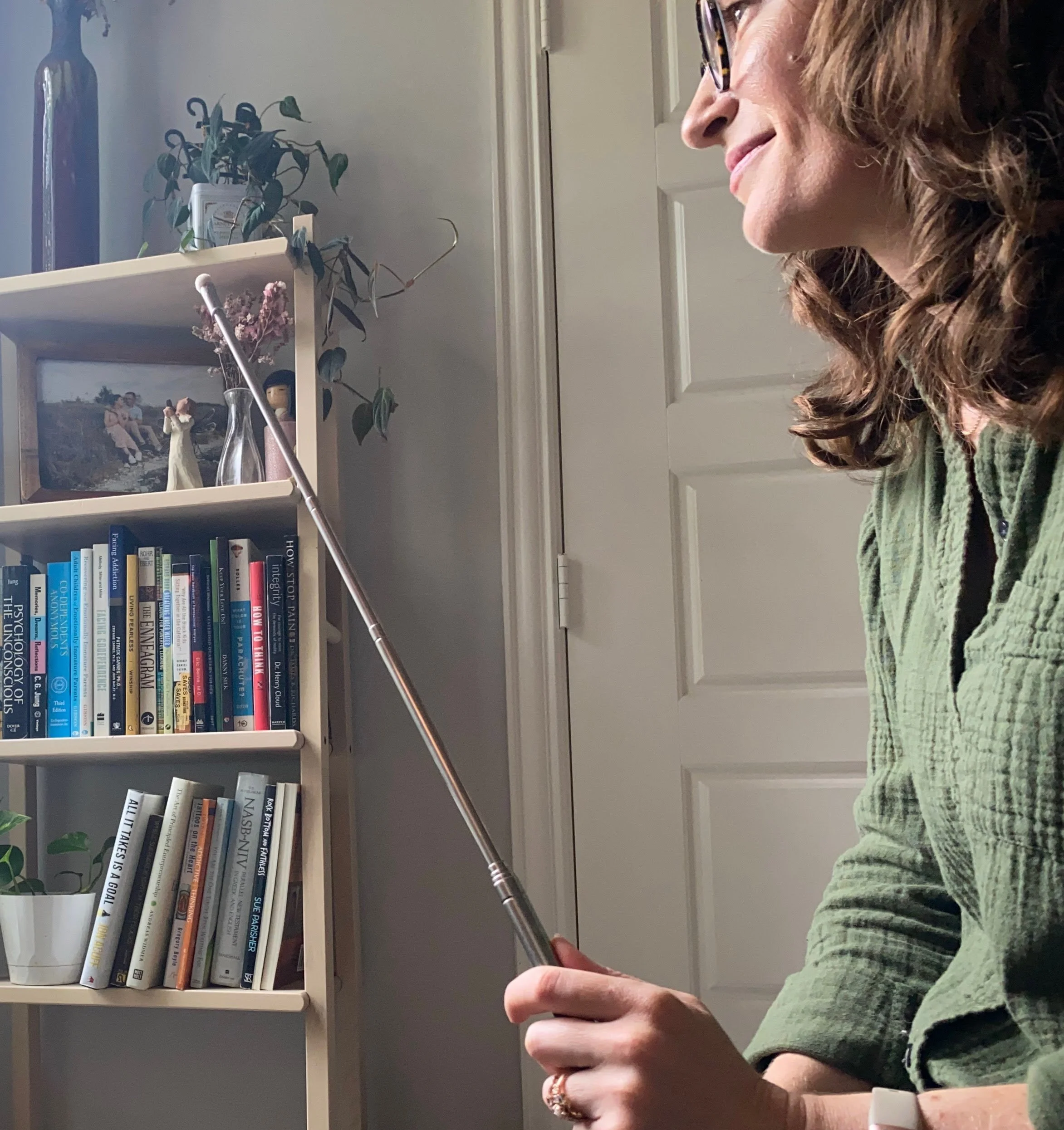
awareness of bodily sensations and noticing how they shift when gazing in certain directions, sometimes at an object in the room and sometimes at a pointer the therapist holds up
mindfulness and nonjudgment: not trying to “get to a certain place,” but trusting the wisdom of the brain in going where it needs to go
listening to music that stimulates both sides of the brain, helping to “bring them into conversation” while processing
Why Your Eyes Are So Powerful
Did you know the human brain has anywhere from 1 to 8 quadrillion synaptic connections? With all the research we’ve done about how the brain works, we still know so little. Your brain is like a vast universe, fully known only to the One who created you. But we do know that a huge percentage of the brain connects to the eyes. Up to 60% of your brain’s processing power is tied directly or indirectly to vision.
The eyes themselves are remarkable, beginning to develop as early as 4 weeks after conception, with more than 200 million working parts—making them the second most complex organ after the brain—and serving as our “first responder” for orienting ourselves to reality, sensing danger, and pursuing pleasure throughout our lives.
While Brainspotting, I have seen people physically release trauma and lies they’ve been holding onto since childhood. I’ve seen people have intimate, healing, restorative moments with God. I’ve seen people become more grounded in their identities. I love this approach because I love getting to see people get what they came to therapy for.